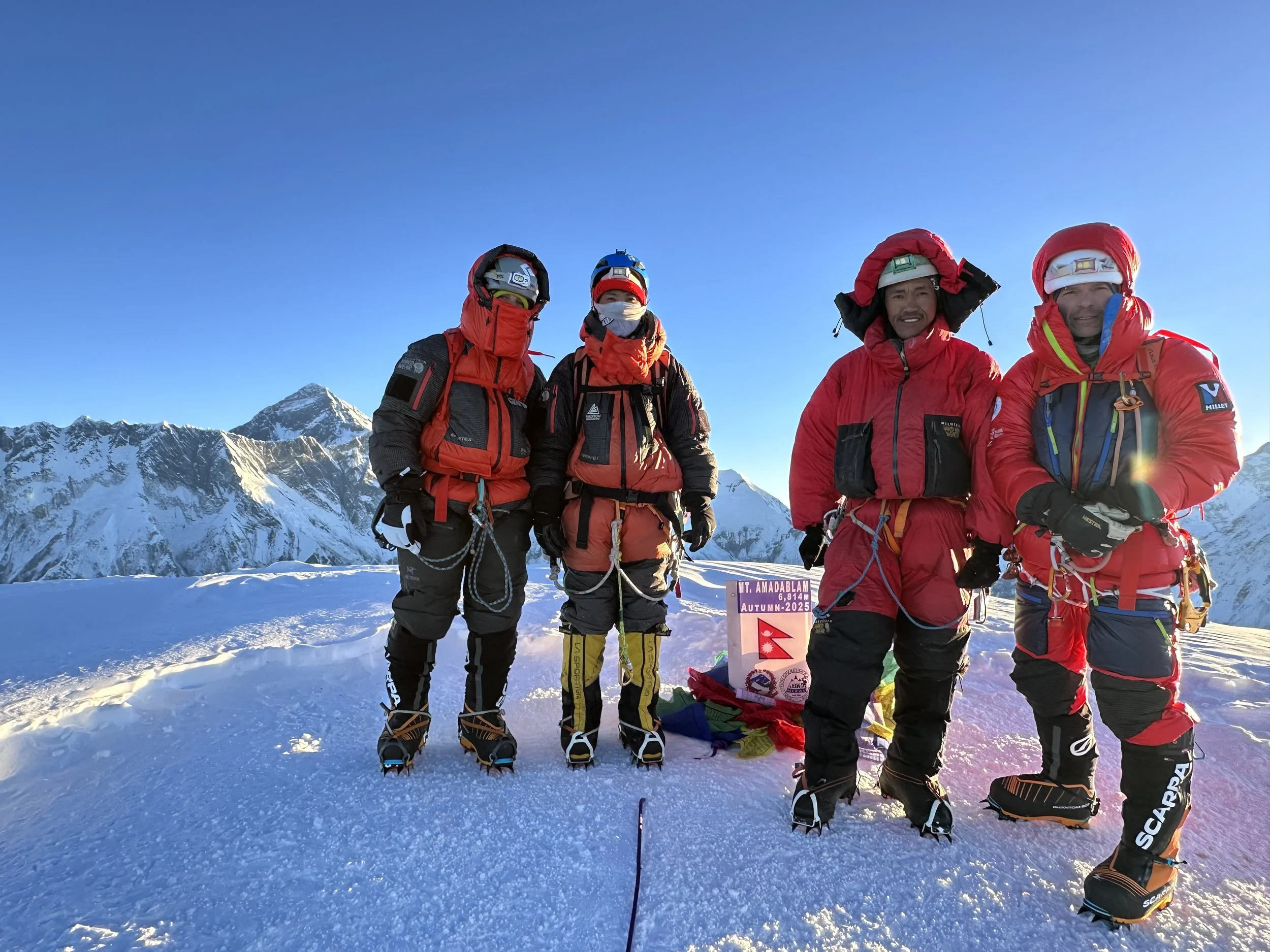
AMA DABLAM EXPEDITION 2026
OCTOBER 15 - NOVEMBER 10 2026 / $14,900 USD
Ama Dablam’s South West Ridge is one of the most stunning climbing routes in the Himalaya and a bucket-list ascent for dedicated alpinists. An exposed rock ridge, towering rock walls and intricate climbing sections, stretches from Camp One to the summit ice fields, offering a thrilling combination of technical challenge and breathtaking views. With unparalleled exposure, the route provides climbers with spectacular panoramas of the Everest Massif—views that are as breathtaking as the climb itself.
Our 25 Day EXPEDITION, OCTOBER 15 -NOVEMBER 10, 2026 follows the historic route of the mountain's first ascent: the Southwest Ridge. First climbed in 1961, this route is remarkably diverse, offering a wide range of climbing experiences on the journey to the summit. From Camp 1 onward, the route is consistently exposed and technically demanding
This world-class alpine route is celebrated not only for its beauty but also for its accessibility, solid rock, and an unforgettable summit day. Climbers tackle steep and exposed snow slopes, rewarded by vistas of Everest, Makalu, Cho Oyu, the worlds 1st, 5th, and 6th highest peaks!
While the expedition demands solid mountaineering skills, some altitude experience, and an adventurous spirit, it is not overly extreme. Summit day involves steep snow and ice slopes with exhilarating exposure, culminating in an unforgettable achievement at the top.
Base Camp to Camp 1:
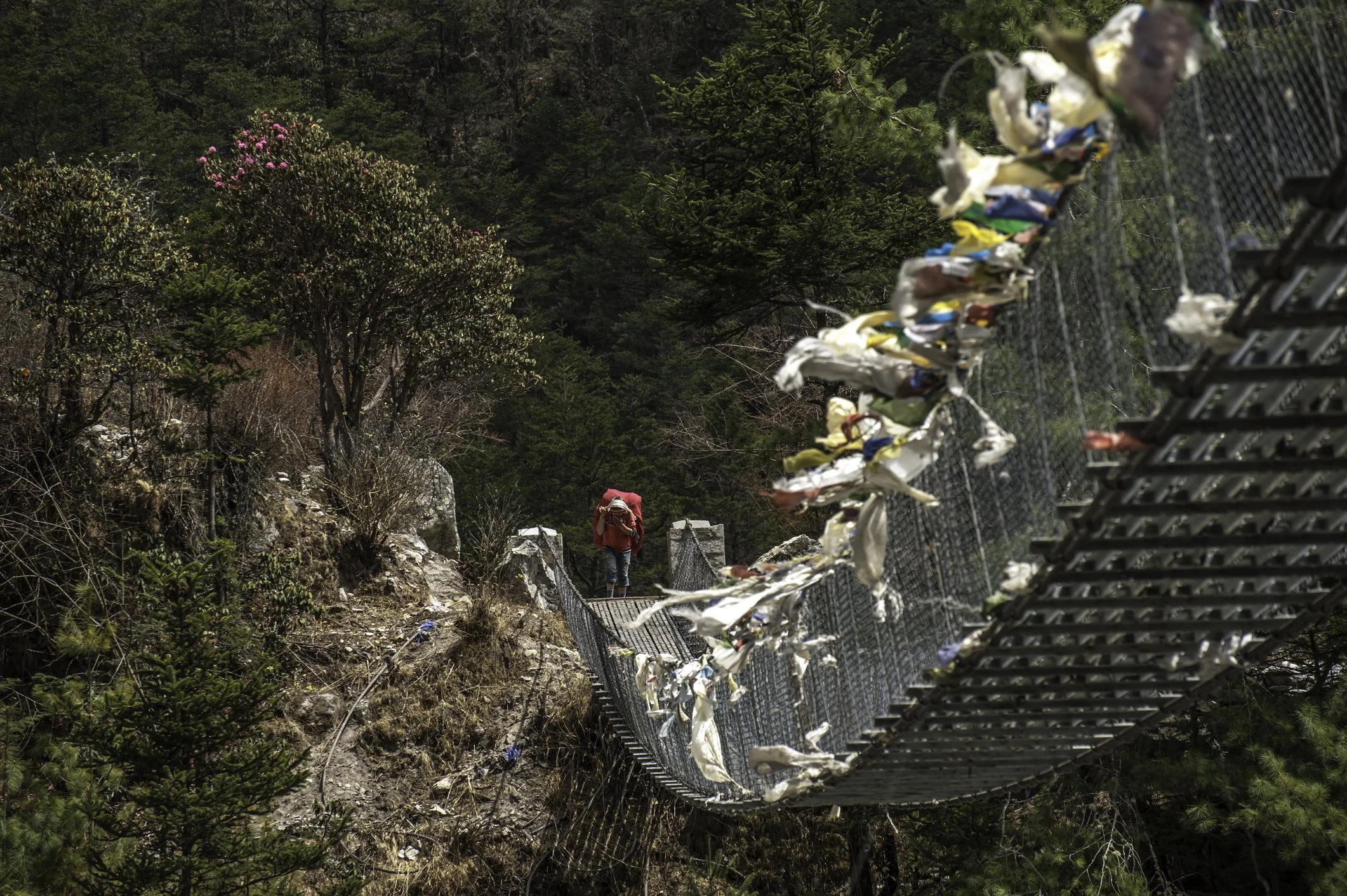
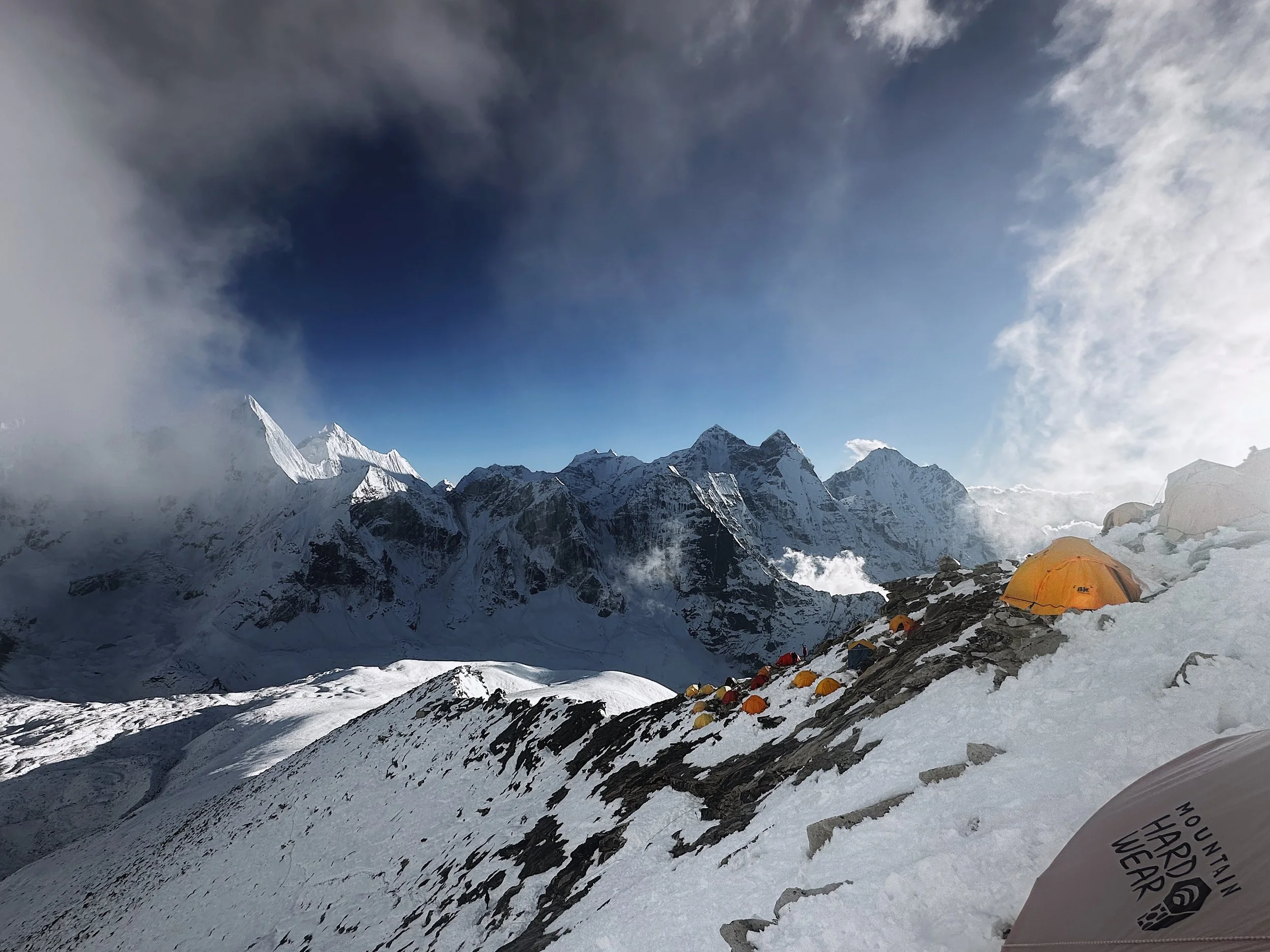
From Ama Dablam Base Camp, the climb begins with a moderate ascent along a moraine ridge. Working our way up to Camp 1 is a perfect continuation of our acclimatization, as it lies at 5,700 m(18,700 ft). The ascent typically takes 5–6 hours from Base Camp. Camp one is a breathtaking perch along the ridge providing a panaramic view of the entire massif and gains us a vantage point to see entire route
Camp 1 to Camp 2:
Between Camps 1 and 2 lies the crux of the route, featuring the most difficult technical rock climbing of the climb. Climbers will encounter engaging traverses and a mix of easy fifth-class moves, culminating in the Yellow Tower—the most difficult rock section on the entire route. Each move requires focus and utmost attention. Thankfully, this entire section is equipped with fixed ropes, allowing climbers to safely and efficiently aid their way up this challenging obstacle.
Camp 2 to Camp 3:
Depending on conditions, this segment presents the most demanding mixed climbing on the route. Sustained pitches of steep ice, snow, and rock lead the way, culminating in the famous Mushroom Ridge. This precarious traverse along cornices clinging to a knife-edge ridge is as thrilling as it is breathtaking.
Camp 2 to the Summit:
Most expeditions use Camp 3 only as a brief stopping point on their way to the summit. Climbers navigate straightforward 40–50° ice and snow slopes, skirting beneath the hanging glacier—known as the Dablam—before tackling the summit face.
This journey combines challenge, exposure, and the deeply rewarding satisfaction of climbing one of the most iconic peaks in the Himalayas.